


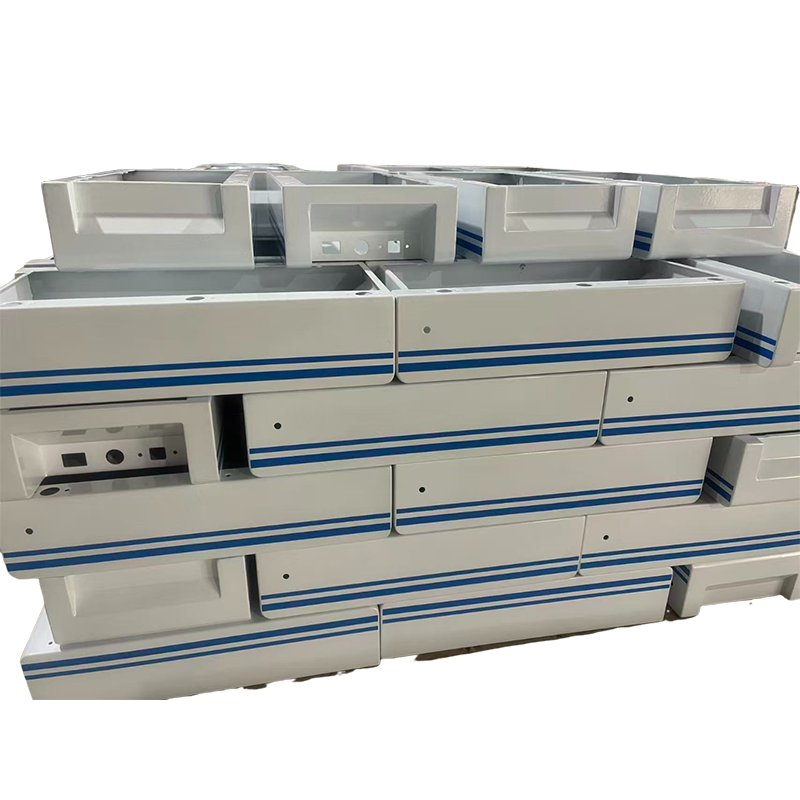




The electric vehicle (EV) revolution is moving very fast. Central to this shift is the battery pack. This component is both powerful and very sensitive. Therefore, it requires a robust protective shield. This shield is the battery enclosure. Manufacturers rely on the sheet metal parts manufacturing process for this task. This process creates strong and lightweight housings. It ensures the battery stays safe during daily use. It also protects passengers from potential hazards. 🔋
The Critical Role of the Battery Enclosure
An EV battery enclosure is more than just a box. It acts as the primary safety barrier. It must withstand road debris and harsh weather. Furthermore, it must manage internal heat effectively.
High-quality sheet metal parts manufacturing process steps provide this strength. Without precision, the enclosure might leak or crack. A failure here could lead to catastrophic fires. Consequently, engineers prioritize accuracy above all else. They use advanced metals like aluminum and high-strength steel. 🛡️
Precision Laser Cutting for Perfect Fit
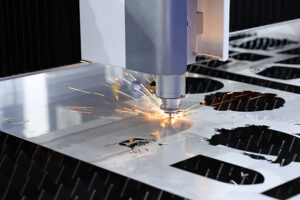
The manufacturing process begins with sheet metal. A high-powered fiber laser is used to help cut complex shapes. Laser cutting ensures that every cut edge is perfectly smooth, which is crucial for subsequent sealing. Any tiny gap can allow moisture to seep in. Moisture is the enemy of lithium-ion batteries. Therefore, the manufacturing process for sheet metal parts employs 4K-level precision from the very beginning. This precision prevents short circuits caused by water ingress. ⚡

CNC Bending and Structural Integrity
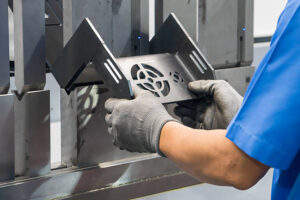
After cutting, the metal must take its final shape. We use CNC bending machines for this stage. These machines fold metal with high angular accuracy. 📐
Creating Rigid Reinforcement Ribs
A flat sheet of metal is often too flexible. However, bending creates structural “ribs” or channels. These shapes increase the overall stiffness of the enclosure. This rigidity is essential for crash protection. It keeps the battery cells from being crushed. 🚗
Maintaining Tight Tolerances
Modern EVs have very tight internal spaces. Every millimeter counts in the chassis design. The sheet metal parts manufacturing process maintains strict tolerances. This ensures the enclosure fits perfectly into the car frame. A perfect fit reduces vibrations during high-speed driving. 🏁
Advanced Welding and Sealing Techniques
The enclosure must be a sealed environment. Manufacturers use various welding methods to join the parts. Laser welding and CMT welding are very common today. 👨🏭
Ensuring IP67 Waterproof Standards
The goal of sheet metal parts manufacturing is to achieve a high protection rating (IP rating). This means that dust and water resistance of the enclosure requires advanced welding techniques to create continuous, strong welds. These welds must be able to withstand the test of time throughout the entire service life of the vehicle. Therefore, to ensure consistent weld quality, robotic arms are typically used for welding. 🤖
Managing Thermal Expansion
Batteries get hot during fast charging sessions. Metal expands and contracts with temperature changes. A smart manufacturing process accounts for this movement. It prevents the welds from cracking over time. This durability is a key pillar of EV safety. 🌡️
Why Precision Matters: The “Speed Bump” Example
Let us look at a real-world scenario. Imagine an EV driving over a sharp speed bump. Or, consider a small rock hitting the underbody. 🧱
If the sheet metal parts manufacturing process was flawed, the metal might dent. A deep dent could pierce a battery cell. This leads to a dangerous “thermal runaway” event. However, a precision-engineered enclosure absorbs the impact. It distributes the force across the entire metal frame.
This “impact management” is only possible through expert fabrication. It proves that the manufacturing quality directly saves lives. The metal acts as a sacrificial shield for the energy core. 🛡️
Surface Treatment and Corrosion Resistance
EVs face rain, snow, and road salt every day. These elements cause rust on unprotected metal. Therefore, surface treatment is a mandatory step. 🌊
-
Powder Coating: This adds a thick protective layer.
-
Anodizing: This increases the hardness of aluminum parts.
-
E-Coating: This provides total coverage in every corner.
These steps are part of the sheet metal parts manufacturing process. They prevent corrosion from weakening the structure. A rusty enclosure is a safety risk for the driver. Proper coating ensures the battery stays dry and secure for years. ❄️
Thermal Management Integration
Safety also involves keeping the battery cool. Many enclosures feature integrated cooling plates. These plates are part of the sheet metal assembly. 🧊
The manufacturing process creates tiny channels for coolant. These channels must be leak-proof and very efficient. Precision stamping creates these complex paths in the metal. This allows for rapid heat dissipation during long trips. Good thermal management prevents battery aging and fires. It is a masterpiece of modern metalwork. 🏎️
Weight Reduction for Better Range
Safety must not make the car too heavy. A heavy car has a shorter driving range. Therefore, manufacturers use “thin-wall” high-strength designs. ⚖️
The sheet metal parts manufacturing process allows for thinner sheets. We use alloys that are light but very tough. This balance is the “Holy Grail” of EV engineering. It keeps the passengers safe without wasting energy. Precision fabrication makes this optimization possible today. 🍃
Quality Control and Testing Standards
No part leaves the factory without rigorous testing. We use 3D laser scanners to check dimensions. 🔍
-
Leak Testing: We submerge the enclosure in water.
-
Vibration Testing: We simulate thousands of road miles.
-
Crash Testing: We verify the metal’s impact resistance.
Every step of the sheet metal parts manufacturing process is documented. This creates a “birth certificate” for every battery box. If a problem occurs, we can track the exact cause. This accountability drives the industry toward zero defects. ✅
The Future of EV Metal Fabrication
The industry is moving toward “Megacasting” and large assemblies. However, sheet metal remains the most flexible choice. It allows for rapid design changes and lower costs. 💡
Modern sheet metal parts manufacturing process trends include AI monitoring. Cameras check every weld in real-time. This prevents human error during the assembly phase. As technology evolves, enclosures will become even safer. They will also become easier to recycle at end-of-life. ♻️
Conclusion
The sheet metal parts manufacturing is the silent hero of EVs. It provides the strength needed to house massive energy. It uses laser cutting and CNC bending for total precision. Most importantly, it keeps the battery and passengers safe. 🌟
When you drive an EV, remember the metal shield below. It is the result of thousands of engineering hours. High-quality manufacturing makes the green transition possible. It ensures that our future is both clean and very secure. 🏆