


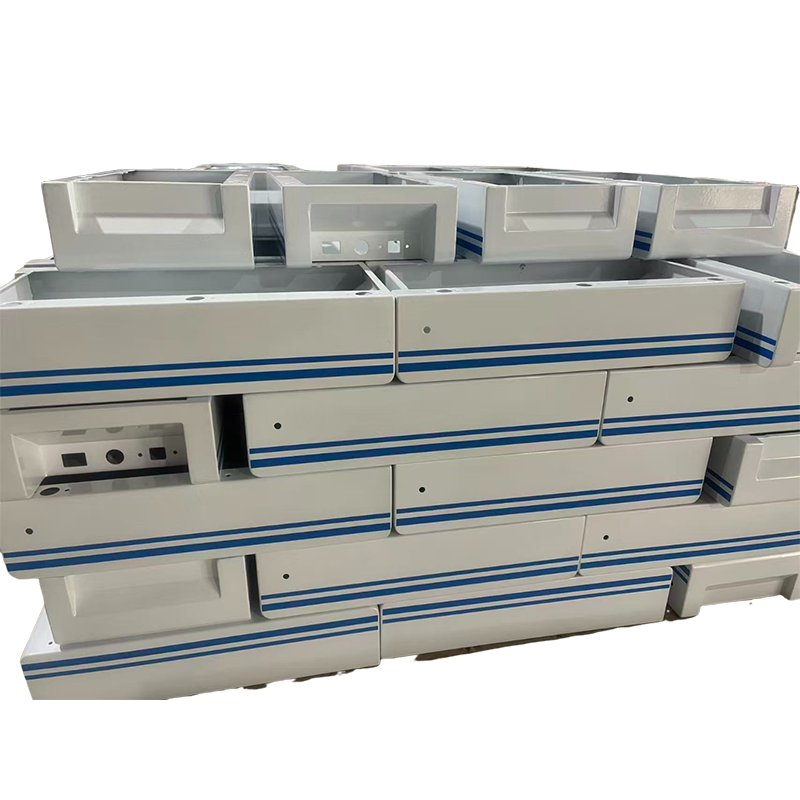




Partnering with a specialized sheet metal processing factory remains the best way to secure high-quality hardware parts. This industrial engineering setup delivers excellent structural precision across complex product designs.
Small, unequipped machine shops often face long production delays due to poor technical machinery. Conversely, an established manufacturer utilizes advanced automated tooling lines to ensure fast, consistent product turnarounds.
Furthermore, this raw asset scale allows hardware brands to scale production runs easily without sacrificing component tolerances. Ultimately, this seamless hardware foundation protects your engineering budgets while lowering your assembly rejection rates. Now, let us analyze the hidden supply bottlenecks that make uncertified fabrication facilities highly risky.
The Sourcing Bottleneck: Why Outdated Machinery Ruins Custom Metal Fabrication
Every hardware engineering manager knows the deep stress of receiving warped brackets right before final assembly deadlines. This costly manufacturing disaster typically happens because designers rely on low-tier workshops with manual bending tools.
How Manual Press Brakes Cause Angle Variation and Assembly Failures
Old manual machines depend completely on the physical strength and mood of the line worker. Consequently, part dimensions vary across different manufacturing batches, creating massive alignment headaches on assembly lines.
The resulting layout errors force your field technicians to grind individual metal enclosures manually during installation. Therefore, maintaining consistent mechanical tolerances across large hardware rollouts requires advanced CNC control systems.
Why Burnt Edges from Weak Lasers Hurt Coating Adhesion Performance
Low-power laser cutters struggle to slice through thick carbon steel plates cleanly. Instead, they cook the metal edges slowly, creating hard slag layers that flake off later.
As a result, expensive industrial powder coatings fail to stick to these contaminated raw surface lines properly. Therefore, utilizing an integrated precision custom metal fabrication center remains vital to guarantee clean laser profiles.
Technical Core: Inside a Modern Sheet Metal Processing Factory
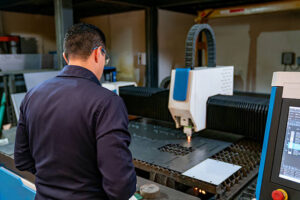
To satisfy strict modern engineering standards, elite production hubs run fully digitized manufacturing ecosystems. These smart facilities pair rapid laser cutting tech with automated material storage networks to optimize speed.
Harnessing Fiber Laser Technology for Ultra-Fast Geometric Profiling
Modern production centers use high-power fiber lasers that reach up to twenty kilowatts of cutting power. These machines glide through raw stainless steel sheets at incredible speeds while maintaining microscopic cutting tolerances.
Consequently, complex internal vent patterns require zero secondary deburring work before moving to paint rooms. Your parts emerge with perfectly crisp edges, matching your original engineering CAD drawings with absolute fidelity.
The Decisive Value of Multi-Axis CNC Bending for Intricate Metal Shapes
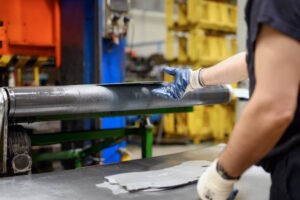
Advanced hydraulic press brakes utilize computer-controlled back gauges to position raw metal sheets with extreme precision. These systems adjust bending pressures in real time to correct for natural sheet metal springback variation:
-
Automated Gauge Adjustments: Ensure identical bend angles across thousands of consecutive metal parts.
-
Multi-Stage Tool Setups: Form complex metal enclosures in one continuous workflow to maximize speed.
-
Precision Tool Loading: Minimizes machine changeover times, making small prototype batches highly affordable.
-
Laser Angle Measurement: Monitors metal distortion dynamically during the stroke to prevent over-bending errors.
Performance Matrix: Low-Tier Workshops vs. Advanced Processing Factories
| Production Metric | Low-Tier Manual Workshops | Premium Sheet Metal Processing Factory |
| Laser Cutting Accuracy | Loose tolerances (Greater than 0.5mm) | Ultra-Precise (Maintains under 0.05mm radius) |
| Bending Angle Consistency | High variance (Requires manual tuning) | Total Precision (CNC tracking ensures stability) |
| Material Sourcing Speed | Slow (Relies on external steel vendors) | Instant (Maintains massive local raw sheet stock) |
| Production Scale Capability | Low (Fails on high-volume runs) | Infinite (Runs automated 24/7 robotic cells) |
| Quality Audit Infrastructure | Basic (Uses standard manual calipers) | Advanced (Employs automated 3D scanner systems) |
Strategic Business Benefits: Slicing Production Lead Times and Boosting Margin ROI
Sourcing your structural components from a certified industrial hardware prototyping supplier yields massive long-term financial rewards. This strategic hardware partnership transforms unpredictable project design timelines into highly profitable, reliable market launches.
Eliminating Wasteful Multi-Vendor Freight Fees Through Turnkey Operations
Traditional metal prototyping forces you to send laser-cut blanks to separate welding and coating shops. This fragmented method adds hundreds of dollars in unnecessary shipping costs to your project bookkeeping logs.
In contrast, a turnkey processing hub handles cutting, bending, welding, and surface treatment inside one single roof. This centralized production flow cuts your shipping times by half, moving products to markets faster.
Shielding Heavy Hardware Projects from Disruptive Material Scarcity
Small machine shops buy steel sheets on demand, making them highly vulnerable to sudden market price changes. When raw material shortages strike, these minor vendors lose access to raw sheet metal allocations completely.
An elite factory maintains massive local raw material stockpiles, insulating your production line from global supply shocks. This stock safety guarantees your factory orders stay on track, protecting your brand’s market delivery promises.
Quality Blueprint: Ensuring Strict Compliance Across Complex Enclosure Builds
Achieving elite structural performance requires verifying your custom metal assemblies against rigorous aerospace inspection protocols. Ensure your supply team verifies these vital production metrics before approving final bulk container shipments.
-
Audit Material Mill Sheets: Verify raw steel chemical composition logs to ensure structural durability.
-
Verify Weld Penetration Depth: Run ultrasonic test scans across critical load-bearing steel joints.
-
Check Coating Thickness Profiles: Utilize eddy-current meters to measure protective powder paint coats.
-
Confirm Thread Tap Tolerances: Check internal screw paths using calibrated go-no-go thread gauges.
Following this simple quality checklist prevents field deployment errors, ensuring your metal brackets survive rugged environments. It builds a highly reliable equipment foundation that easily survives demanding commercial public operations.
FAQ:
What specific file formats should I submit for custom sheet metal quotes?
Professional manufacturing hubs prefer standard 3D STEP or IGES files for automated geometric volume calculations. Additionally, providing flat 2D DXF files helps technicians program laser cutting paths with absolute accuracy. Including a detailed PDF drawing with clear tolerance callouts ensures your critical dimensions receive proper attention.
How does material grain direction affect sheet metal bending operations?
Metal sheets possess distinct internal grain lines created during the initial factory rolling process at mills. Bending raw metal parallel to these grain lines can cause severe cracking along external corner seams. Experienced factory engineers always rotate part layouts to ensure bends happen perpendicular to the metal grain.
What is the practical structural difference between powder coating and wet paint?
Powder coating applies electrostatically charged dry plastic powder that bakes into a thick, rock-hard layer. This finish offers far superior scratch resistance compared to standard liquid paints sprayed in open booths. For rugged outdoor enclosures, powder coating provides excellent rust protection over multi-year operational cycles.
Can a sheet metal factory handle thin precision shim stock manufacturing?
Yes, advanced factories utilize specialized high-frequency fiber lasers to profile thin foil alloys safely. These machines cut paper-thin metals down to 0.05 millimeters without causing heat warpage or edge melting. This capability allows engineers to source custom sealing gaskets and shims from the same main supplier.
Protect Your Brand Rep with Elite Manufacturing Assets
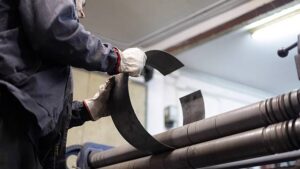
Relying on outdated manual workshops leaves your critical hardware projects vulnerable to severe assembly line failures. You cannot maintain competitive launch schedules if your engineering teams constantly fight warped metal parts. Upgrading your supply chain to leverage an advanced sheet metal processing factory infrastructure redefines your procurement quality. It merges high-speed fiber laser cutting with multi-axis CNC bending to protect your designs from human error.
Stop letting bad tolerances and messy weld joints delay your commercial hardware milestones this business year. Invest in field-proven, tech-driven fabrication assets that stabilize your project budgets and deliver beautiful structural parts. Your assembly staff will appreciate the perfect part alignments, and your accountants will love the reduced scrap. Modernize your industrial sourcing strategy today to lock in total operational control over your physical product lines.