






In precision manufacturing, consistency defines success. Machine shops must produce identical components across long production runs daily. However, maintaining tight tolerances remains a significant operational challenge. Many machinists face dimensional drift during complex operations. Therefore, optimizing your cnc machine spare parts hardware becomes essential.
Precision alignment of internal components directly impacts your turning accuracy. Minor mechanical misalignments can cause noticeable concentricity issues. This guide analyzes how careful internal hardware calibration transforms your workshop performance. Let us examine the mechanics behind flawless turning execution.
The Core Elements of CNC Turning Repeatability
Repeatability refers to a machine’s ability to return to an exact position consistently. It differs from basic accuracy because it measures stability over time.
Understanding Spatial Tolerances
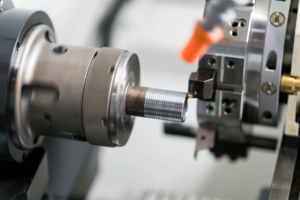
A lathe moves across multiple axes to cut cylindrical profiles cleanly. If the tool turret deviates even slightly, the workpiece dimensions change. Consequently, you will notice variations between the first and hundredth part. This variance destroys part interchangeability in modern assemblies.
The Role of Rigidity in Motion
High cutting forces generate intense physical pressure inside the machine frame. Only perfectly aligned internal supports can absorb these vibrations safely. Thus, rigid component mounting prevents the cutting tool from deflecting during heavy passes.
Critical CNC Hardware Components Requiring Alignment
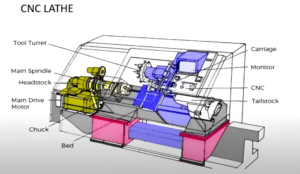
Every internal component must work in perfect harmony to achieve microscopic precision. Let us look at the main elements inside your lathe.
Spindle and Headstock Parallelism
The main spindle holds and rotates your raw stock material. It must sit completely parallel to the linear guide rails. If the headstock tilts slightly, the machine cuts a slight taper instead of a straight cylinder.
Linear Guide Rails and Carriages
Guide rails direct the tool carriage along the cutting path smoothly. These assemblies require absolute straightness across their entire length. Even tiny particles of dust under the rail can cause tracking errors.
-
Ball Screws: These convert rotational motor energy into linear tool movement.
-
Turret Couplings: Curvic couplings ensure the tool indexer locks tightly every time.
-
Tapered Wedges: Adjustable gibs maintain correct pressure on box guideways.
-
Bearing Blocks: Support bearings prevent axial play in the drive shafts.
How Misaligned Spare Parts Cause Part Deflection
When you replace worn components, installation precision is everything. Simply bolting new hardware down rarely yields optimal results.
The Problem with Cumulative Error
Each mechanical joint introduces a tiny amount of physical play. If you align the rails poorly, the ball screw strains harder. This extra stress causes accelerated wear on the internal drive motor. Eventually, these microscopic errors combine to create visible defects on your workpieces.
Thermal Expansion Amplification
Misaligned components generate excessive friction during high-speed rotation cycles. This friction creates localized heat pockets inside the lathe housing. As the metal expands from heat, your zero-point coordinates shift. Thus, your cuts become unpredictable as the workday progresses.
Maintenance Comparison: Aligned vs. Neglected Systems
| Performance Metric | Perfectly Calibrated Lathe Hardware | Neglected Internal Machine Components |
| Dimensional Drift | Less than 2 microns per shift | Up to 15 microns over two hours |
| Surface Finish Quality | Consistent mirror finish | Visible chatter marks and rough texture |
| Tool Insert Lifespan | Maximized edge endurance | Premature chipping due to vibration |
| Scrap Rate Percentage | Below 0.5% on large batches | Frequently exceeds 4% under heavy loads |
| Spindle Bearing Life | Exceeds five years of usage | Often fails within twelve months |
Step-by-Step Hardware Alignment Protocol
Rebuilding your machine’s internal geometry requires a methodical approach. Follow this structural sequence during your next maintenance window.
The Financial Benefits of High-Precision Upgrades
Investing time into aligning your cnc machine spare parts saves substantial money. It changes your shop from reactive fixing to proactive scaling.
Reducing Scrap Material Costs
Titanium and aerospace alloys cost a fortune per foot today. Throwing away parts due to dimensional drift ruins your profit margins. Precise alignment ensures the first part matches the final part exactly. This stability allows you to bid safely on high-precision contract work.
Extending Tool Insert Endurance
When a lathe vibrates, the cutting edges of your carbide inserts chip quickly. Micro-vibrations pound the brittle tool coating constantly during engagement. Proper alignment allows the tool to slice through metal smoothly. This stability doubles your insert life and reduces tooling expenses.
Modern Digital Alignment Tools for 2026
The classic dial indicator remains useful for daily checks. However, advanced shops use digital measurement systems for faster deployment.
Laser Interferometer Assessment
Laser systems measure linear displacement down to sub-micron levels instantly. They catch pitch, yaw, and roll errors across the entire axis travel. This data allows you to input precise compensation values into your CNC controller.
Wireless Electronic Levels
These sensors transmit real-time tilt data to your tablet via Bluetooth. This allows a single technician to adjust leveling bolts efficiently. You see the geometric change immediately without walking back to look at a glass bubble.
Make Precision Calibration Your Standard
Achieving world-class CNC turning repeatability is not a matter of luck. It depends entirely on how you maintain your internal infrastructure. Precise alignment of your cnc machine spare parts hardware keeps your production lines running smoothly. It eliminates the hidden mechanical play that causes costly part rejection.
Take the time to inspect your guideways, spindles, and ball screws regularly. Train your maintenance staff to use correct torquing sequences during component replacement. By controlling your internal machine geometry, you secure your competitive advantage. Start auditing your lathe alignment today to maximize your shop output tomorrow.