






Imagine a commercial jet liner cruising at thirty thousand feet. Every single mechanical part must perform flawlessly under intense atmospheric pressure. There is absolutely no room for component structural failure up there.
Because of this pressure, aerospace engineering requires sub-micron manufacturing precision. Even a microscopic measurement deviation can cause a critical system to fail instantly.
Therefore, aviation procurement teams choose their manufacturing partners with extreme caution. They look for an advanced cnc machining parts factory that understands elite quality control systems.
This technical guide highlights how premier factories achieve incredible aerospace components micro tolerances consistently. We will look at environmental temperature controls, tool wear tracking, and advanced digital metrology labs.
Why Extreme Thermal Control Dominates the Factory Floor
Have you ever considered how temperature shifts alter solid metal blocks? In the world of micron-level machining, ambient room temperature matters immensely. Raw titanium and aluminum alloys expand or contract when room temperatures change. If a factory floor gets too hot, critical component dimensions shift away from blueprints.
To combat this physical expansion problem, elite facilities run heavy-duty climate control systems. They keep the entire production floor at exactly twenty degrees Celsius all day long. Consequently, this stable climate eliminates unpredictable material movement during complex cutting cycles. This thermal discipline ensures that your finished flight parts match your exact engineering drawings perfectly.
Elevating Precision via a Multi Axis CNC Milling Shop
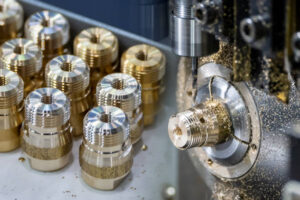
Standard three-axis machining centers do a great job with basic geometric shapes. However, advanced aerospace parts feature complex, organic curves that require a more sophisticated mechanical approach. Partnering with a specialized multi-axis CNC milling factory solves these geometric challenges cleanly. Elite five-axis cutting machines manipulate raw metal blocks along multiple mathematical directions simultaneously.
Because the machine shapes the part in a single setup, you eliminate manual human errors. The cutting bit maintains perfect alignment with the original workpiece coordinates through the entire cycle.
| Machine Hardware Class | Achievable Tolerance | Geometrical Capacity | Best Applied Use Case |
| 5-Axis Milling Unit | ±0.002 Millimeters | Ultra Complex Curves | Turbine Blade Clusters |
| 3-Axis Milling Unit | ±0.010 Millimeters | Simple Flat Designs | Structural Fuel Brackets |
| Swiss CNC Lathe Unit | ±0.005 Millimeters | High Cylindrical | Precision Hydraulic Spools |
Smart Tooling Habits in Aerospace Precision Metal Milling
Cutting through ultra-hard metals like Inconel or titanium creates massive friction heat. This rubbing wear dulls sharp cutting edges quickly, changing your final part dimensions mid-run.
Therefore, mastering aerospace precision metal milling requires a smart, proactive approach to tool life management. Machinists install premium diamond-coated carbide tools that endure extreme friction forces without melting down.
Furthermore, advanced tracking software monitors the exact minutes a tool spins in the metal. The system automatically stops the machine to replace worn tools before dimensions start drifting away.
-
Predictive Software Tracking: Replaces worn tools before they ruin expensive aviation alloys.
-
High-Pressure Coolant Blasts: Flushes hot chips out of deep cavities to prevent heat distortion.
-
Vibration Damping Holders: Eliminate micro-chatter marks on the metal to ensure mirror-smooth surfaces.
-
Live Sensor Monitoring: Adjusts machine movements automatically when the main spindle heats up.
Mastering Your Feed and Speed Rates
Achieving smooth surface finishes requires matching tool speeds to your specific metal alloy hardness. Learn more about adjusting tool speed configurations for titanium to prevent microscopic cracks during fast milling operations.
Final Validation inside Quality Control Coordinate Measuring Machines
You cannot verify micron-level accuracy using simple handheld digital calipers on the factory floor. Aerospace quality assurance requires a separate, isolated testing environment away from loud manufacturing vibrations.
Leading shops route finished batches into metrology labs featuring quality control coordinate measuring machines. These advanced inspection devices use floating ruby probes to verify complex geometries down to nanometer scales.
Metrology Field Insight: True quality testing rooms must sit on isolated concrete slabs. This isolation stops external factory floor vibrations from throwing off the delicate testing probes.
Additionally, non-contact laser scanners capture millions of digital reference points in seconds. The software overlays this 3D data directly onto your CAD files, instantly spotting any hidden flaws.
Guarantee Flawless Aerospace Production Runs
Achieving consistent micron precision requires following a strict, repeatable quality control workflow for every single batch.
Overcoming Tool Deflection and Wall Distortion Challenges
Keeping thin metal walls perfectly straight during heavy cutting cycles presents a major headache for machinists. Heavy physical cutting forces can push flexible metal features away from the tool, causing thickness errors.
To solve this problem, programmers deploy specialized trochoidal milling patterns inside their CAM software. This technique removes material using smooth, circular paths that minimize lateral cutting pressures on the metal. Read our detailed technical guide on stopping tool deflection to maximize your workshop yields.
Additionally, choose stress-relieved, pre-tempered raw metal stock before you begin your initial roughing passes. Using conditioned metals stops the component from twisting unexpectedly when you cut away the outer layers.
The Commercial Power of Certified Manufacturing Partners
Sourcing parts from a highly disciplined, certified machine shop delivers massive long-term advantages for aviation enterprises. First, verified part quality drops your assembly line rejection rates to zero, saving you from missed project deadlines. Components fit together perfectly on the very first try, speeding up your final aircraft assembly schedules.
Second, using an AS9100-certified supplier protects your brand from expensive product liability claims and product recalls. Aviation regulators approve your documentation folders quickly when your vendors provide complete material tracking sheets. Your parts source becomes a powerful competitive asset that helps you win bigger commercial contracts.
Secure Your Competitive Advantage with Total Precision
Can upgrading your component tolerance standards truly transform your position in the global aviation supply chain? The data proves that micron-level accuracy separates industry leaders from average machine shops.
By moving away from standard workshops toward an advanced cnc machining parts factory, you master complex geometries. Relying on verified aerospace components micro tolerances processes ensures your critical parts perform safely under intense flight stress. Invest in professional-grade multi-axis CNC machining today to secure your production lines and scale your business.