






Bringing a brand-new hardware product to the global market requires speed, precision, and reliable engineering. Product development teams face intense pressure to validate complex designs before commencing mass production runs. Consequently, engineering departments need manufacturing methods that deliver highly accurate prototype components without long tooling delays.
Fortunately, modern subtractive manufacturing processes provide an exceptional path forward for global developers. Many successful product innovators now depend heavily on premium customized cnc turning parts. This reliable manufacturing approach transforms digital CAD models into functional metal or plastic prototypes within days.
This guide outlines how precise lathe fabrication accelerates your design verification timelines. Furthermore, we examine the core engineering benefits driving modern industrial engineering projects.
The Critical Challenges of Early-Stage Product Development
Engineering teams often face massive hurdles when transitioning from digital concepts to physical working models. Traditional casting or injection molding methods require incredibly expensive custom tooling investments upfront.
Consequently, waiting weeks for a test mold stalls your entire engineering department schedule completely. Furthermore, early design iterations almost always require sudden dimensional adjustments after physical assembly testing. Modifying a hard steel production mold costs immense amounts of money and ruins tight project deadlines.
Therefore, hardware startups require an agile, tooling-free manufacturing solution to keep development cycles moving smoothly. Utilizing professional custom manufacturing parts prototyping allows teams to discover design flaws early, protecting tight commercial launch budgets.
Accelerating Timelines with Rapid Prototyping Components
Eliminating Hard Tooling Lead Times
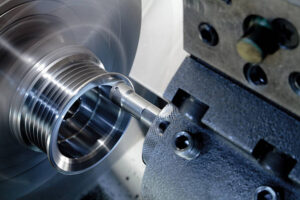
Traditional manufacturing techniques force engineering teams to wait weeks for initial prototype production runs. Computer numerical control lathes operate without requiring any expensive, specialized molding shapes or custom stamping dies.
The computer-guided cutting tool shapes raw metal bars based entirely on digital software instructions. This direct digital workflow reduces your part turnaround time from several weeks to just a few days. Consequently, your design group receives functional rapid prototyping components while the concept remains fresh in mind.
Quick Implementation of Design Iterations
Physical testing usually reveals unexpected interference fit problems or mechanical clearance issues inside complex assemblies. Machinists can modify the digital CAD model within minutes to correct these discovered defects easily.
The updated program feeds straight into the cutting lathe to produce a revised part immediately. This rapid feedback loop allows companies to test multiple design versions within a single week. This agility shortens your overall development cycle drastically, giving your brand a distinct market advantage.
The Role of Precision CNC Lathe Services in Design Verification
Achieving Tight Dimensional Tolerances
Functional prototypes must mimic final production parts perfectly to yield meaningful real-world evaluation data. Medical components and aerospace hardware require dimensional accuracy down to single-digit micron levels.
Utilizing professional precision cnc lathe services guarantees exceptional component repeatability across every test batch. The rigid mechanical construction of modern lathes eliminates human cutting errors completely during the machining process. Therefore, your engineering team evaluates physical stresses using parts that match your exact drawing specifications.
Superior Surface Finish Quality
Rough surface textures often interfere with delicate fluid seals or fast-moving mechanical bearing interfaces. Standard 3D printing methods leave ugly stepped layer lines that ruin realistic friction testing results.
Turning machines rotate the raw material block against specialized diamond tipped cutting inserts continuously. This smooth spinning action delivers a flawless surface finish that requires zero manual post-processing work. Consequently, your components arrive ready for immediate installation into high-performance pneumatic or hydraulic test systems.
Material Realism and Structural Integrity
Machining True Production-Grade Materials
3D printed plastic models help visualize product shapes but fail during intense physical load testing. Plastic filaments cannot simulate the true tensile strength or heat resistance of industrial metals.
Our turning equipment cuts actual production-grade materials, including stainless steel, aircraft aluminum, and engineering plastics. This material authenticity ensures your prototype handles real thermal, chemical, and mechanical stresses accurately. Testing real metal parts gives engineers reliable data to predict long-term field performance safely.
Perfect Isotropy and Part Strength
Layer-by-layer printing techniques create inherent weak points between the stacked lines of plastic material. These weak joints split easily under sudden twisting loads or heavy impact forces.
Turned parts retain the completely uniform internal grain structure of the original solid metal bar stock. This structural integrity ensures the component handles multidirectional stress fields without breaking prematurely. Your field evaluation data remains highly accurate, reducing dangerous product liability risks later.
Streamlining the Transition to Mass Production
Creating a Reusable Manufacturing Blueprint
The digital code used to carve your prototype serves as a direct foundation for mass manufacturing. Machinists utilize the exact same tooling paths when scaling up production volume later.
This digital continuity eliminates the need to reinvent manufacturing steps when moving from laboratory environments to factory floors. Your business saves massive engineering overhead costs during the critical commercial scale-up phase.
Lowering Financial Risk Profiling
Sinking capital into unverified production molds creates immense financial danger for modern hardware enterprises. A single calculation error can ruin a fifty-thousand-dollar injection mold completely.
Using customized cnc turning parts allows you to prove your business concept before buying hard tooling. Investors provide funding much more readily when they examine functional, lathe-cut physical models. This risk mitigation step secures your financial runway during competitive metal turnaround product development campaigns.
What to Look For in a Prototyping Partner
Not all machine shops possess the specialized skills required for rapid prototyping support. B2B buyers must evaluate specific engineering capabilities before signing long-term supplier agreements. First, verify the manufacturer maintains a dedicated rapid prototyping cell separate from their mass production line. This separation ensures your small sample orders never get delayed by massive automotive factory runs.
Second, ensure the facility provides comprehensive inspection documentation, including detailed coordinate measuring machine reports. Working with certified machinists guarantees your parts arrive exactly as ordered, preventing confusing assembly errors. Choose an agile partner who communicates technical feedback quickly during your development journey.
Conclusion
Accelerating product development cycles ensures long-term commercial success in today’s fast-moving industrial markets. Implementing high-quality customized cnc turning parts solves multiple engineering and financial bottlenecks simultaneously.
Advanced subtractive machining removes long tooling lead times, delivers microscopic tolerances, and utilizes real production-grade metals. These reliable manufacturing systems transform complex digital blueprints into flawless, field-ready functional prototypes rapidly.
Ultimately, utilizing precision lathe services minimizes design risks while maximizing your overall product launch confidence. Partner with a proven manufacturing specialist to upgrade your product development infrastructure today. Contact our technical team to design your custom engineering solutions.